
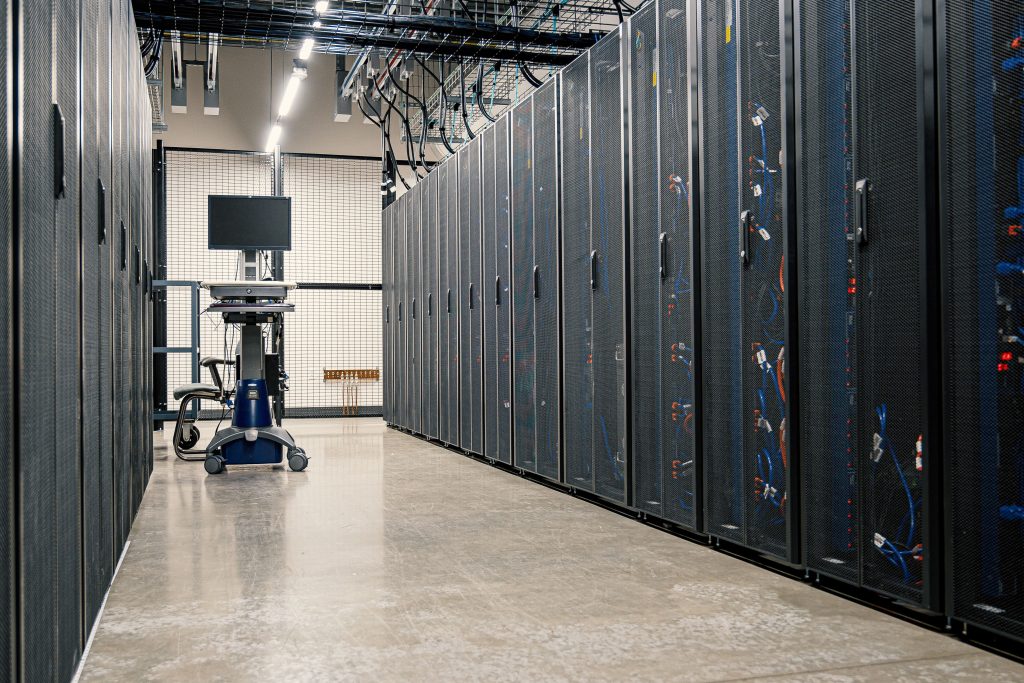
The explosive growth of artificial intelligence is transforming more than just technology—it is fundamentally reshaping commercial construction. Data centers emerged as the dominant commercial construction sector in 2025, and industry forecasts suggest this momentum will continue well into 2026 and beyond as organizations race to build the digital infrastructure required to support AI-driven innovation.
While data centers share similarities with manufacturing and processing facilities—large footprints, sophisticated mechanical and electrical systems, and highly specialized interior fit-outs—they introduce a unique combination of scale, technical complexity, and performance expectations that significantly elevates professional liability exposure. From project planning through post-occupancy operations, every phase presents risks that can translate into high-severity claims if not proactively managed.
Why Data Centers Present Unique Risk Challenges
Unlike conventional commercial projects, data centers operate under an expectation of near-continuous uptime. Delays, system failures, or operational disruptions can have significant financial consequences, making risk allocation and project coordination more critical than ever.
Below are the key risk factors shaping professional liability exposure on today’s data center projects.
1. Mega-Projects Mean Mega Exposure
Modern data centers frequently carry construction values exceeding one billion dollars. At this scale, even relatively minor design errors or coordination issues can have substantial financial implications.
Claim severity often reflects cumulative exposure across multiple project phases rather than a single isolated event. Early alignment between project scope, delivery method, contractual obligations, and liability limits is essential to managing this exposure.
2. Compressed Schedules and Zero Tolerance for Delay
Owners increasingly view data centers as critical infrastructure. Every day of delayed completion can postpone revenue generation and disrupt business operations.
Aggressive construction schedules leave little room for design revisions, permitting delays, or coordination challenges. Small setbacks early in a project can cascade into significant downstream impacts, dramatically increasing claim severity.
Successful teams establish:
- Clearly defined schedule responsibilities
- Realistic milestone planning
- Comprehensive documentation of delay causes
- Transparent communication regarding schedule risks
3. Regulatory and Infrastructure Constraints
Data center development is becoming increasingly influenced by regulatory requirements surrounding:
- Power availability
- Water consumption
- Environmental impacts
- Noise restrictions
- Local zoning and permitting
Many jurisdictions are introducing new legislation governing data center development, particularly as communities grapple with increasing utility demands.
Although these factors are often outside the control of design and construction professionals, they can significantly affect project schedules and increase exposure to third-party or neighboring property claims. Thorough documentation of permitting assumptions, owner decisions, and infrastructure dependencies is increasingly important.
4. Specialized Labor Shortages
Mechanical, electrical, plumbing (MEP), controls, security, and commissioning systems in data centers are considerably more sophisticated than those found in traditional industrial facilities.
Labor shortages—particularly in non-metropolitan markets—often require multiple specialty subcontractors to perform highly segmented scopes of work. This fragmented approach increases interface risks and can create uncertainty around system performance responsibilities.
Clearly defining responsibilities across specialty trades is critical to reducing both construction defects and post-occupancy disputes.
5. Growing Reliance on Modular Construction
To address labor shortages and compressed schedules, many developers are turning to modular and prefabricated construction.
While off-site fabrication can improve efficiency, it also introduces additional professional liability considerations, including:
- Design coordination
- Quality control
- Transportation damage
- Manufacturing tolerances
- Responsibility for performance across multiple organizations
Successful modular delivery depends on clearly aligning design responsibilities, quality assurance processes, and performance expectations among designers, fabricators, contractors, and suppliers.
6. Operational Readiness Extends Beyond Construction
Completing construction does not necessarily mean a facility is ready for operation.
Data centers depend on highly integrated Building Management Systems (BMS), controls, commissioning, and operational testing before they can reliably support mission-critical workloads.
Many post-occupancy claims arise when:
- System interoperability is incomplete
- Documentation is insufficient
- Deficiencies remain unresolved
- Operations teams are inadequately trained
Rather than treating turnover as a single milestone, owners and project teams should approach handover as a structured, multi-phase transition that includes commissioning, training, documentation, and operational readiness.
7. Sophisticated Owners Drive Aggressive Contract Terms
Many data center developments are financed by institutional investors or private equity-backed organizations that actively seek to transfer project risk through contract language.
Design professionals and contractors—particularly those responsible for electrical, mechanical, fire protection, and controls systems—must carefully evaluate whether contractual obligations are:
- Clearly defined
- Commercially reasonable
- Professionally insurable
Ambiguous scopes of work, delayed owner decisions, and inadequate documentation can all complicate liability allocation during disputes.
8. Insurance Capacity Is Becoming Increasingly Challenged
As project values continue to rise, insurers face growing concentrations of risk on individual developments.
Professional liability, pollution liability, general liability, and project-specific insurance programs—including Owner’s Protective Professional Indemnity (OPPI)—are all experiencing increased underwriting scrutiny.
Project participants should engage early to ensure:
- Adequate insurance limits
- Alignment between contractual obligations and available coverage
- Understanding of project-specific insurance structures
- Coordination among all insured parties
Early planning can help avoid coverage gaps that may not become apparent until a claim arises.
9. Delegated Design Creates Complex Liability Chains
Delegated design has become increasingly common on data center projects, particularly within design-build and engineering, procurement, and construction (EPC) delivery models.
Responsibility for specific system design elements is frequently transferred to contractors, specialty subcontractors, suppliers, or consulting engineers.
While delegated design can improve project efficiency, unclear scope definitions can create unintended professional liability for upstream project participants.
Successful delegated design requires:
- Clearly defined scopes of responsibility
- Qualified design professionals
- Appropriate insurance coverage
- Well-documented performance requirements
- Careful coordination across all project interfaces
Without these safeguards, liability may extend well beyond the party actually performing the design work.
Looking Ahead
The rapid expansion of AI infrastructure shows no signs of slowing. As data centers continue to dominate commercial construction, project teams must recognize that these facilities introduce a fundamentally different risk profile than traditional commercial developments.
The greatest professional liability exposures often arise not from isolated technical mistakes, but from misaligned responsibilities, compressed schedules, fragmented project delivery, and unclear contractual obligations.
As design-build and EPC delivery models become increasingly prevalent, successful risk management will depend on early collaboration, disciplined documentation, clearly defined roles, balanced contractual risk allocation, and insurance strategies that evolve alongside the growing complexity of these projects.
Organizations that proactively address these challenges will be better positioned to deliver resilient, high-performing facilities while minimizing professional liability exposure throughout the project lifecycle.
Find Out More HERE.